Hidden Gems in Cox’s Bazar: Beyond the Beach
Cox’s Bazar is a name that every Bangladeshi knows—the world’s longest natural sea beach, stretching over 120 kilometres of unbroken coastline along the Bay of Bengal. Every year millions of visitors pour in to catch the sunrise over the surf, taste fresh seafood at roadside stalls, and feel the salty breeze on their skin. Yet for all its fame, Cox’s Bazar keeps some extraordinary secrets. The traveller who ventures beyond the main beach strip discovers a completely different world: ancient Buddhist temples perched on hilltops, mangrove forests teeming with wildlife, tribal villages where age-old crafts are still practised by hand, and hidden coves so pristine they look untouched by time.
This guide is written for the curious soul who wants more than a standard beach holiday. Whether you are a solo explorer, a couple seeking romance, a family craving adventure, or an investor eyeing one of South Asia’s fastest-growing tourism destinations, the hidden gems of Cox’s Bazar have something extraordinary in store for you. And when the day’s exploration is done, there is no finer place to rest than at the heart of Inani Beach—where Salt Bay, Bangladesh’s upcoming world-class five-star hotel, is redefining the meaning of coastal luxury.
1. Inani Beach: The Coral Beach That Tourists Miss
Most visitors to Cox’s Bazar never make it to Inani. They settle for the crowded strips near Sugandha or Laboni and assume they have seen everything.
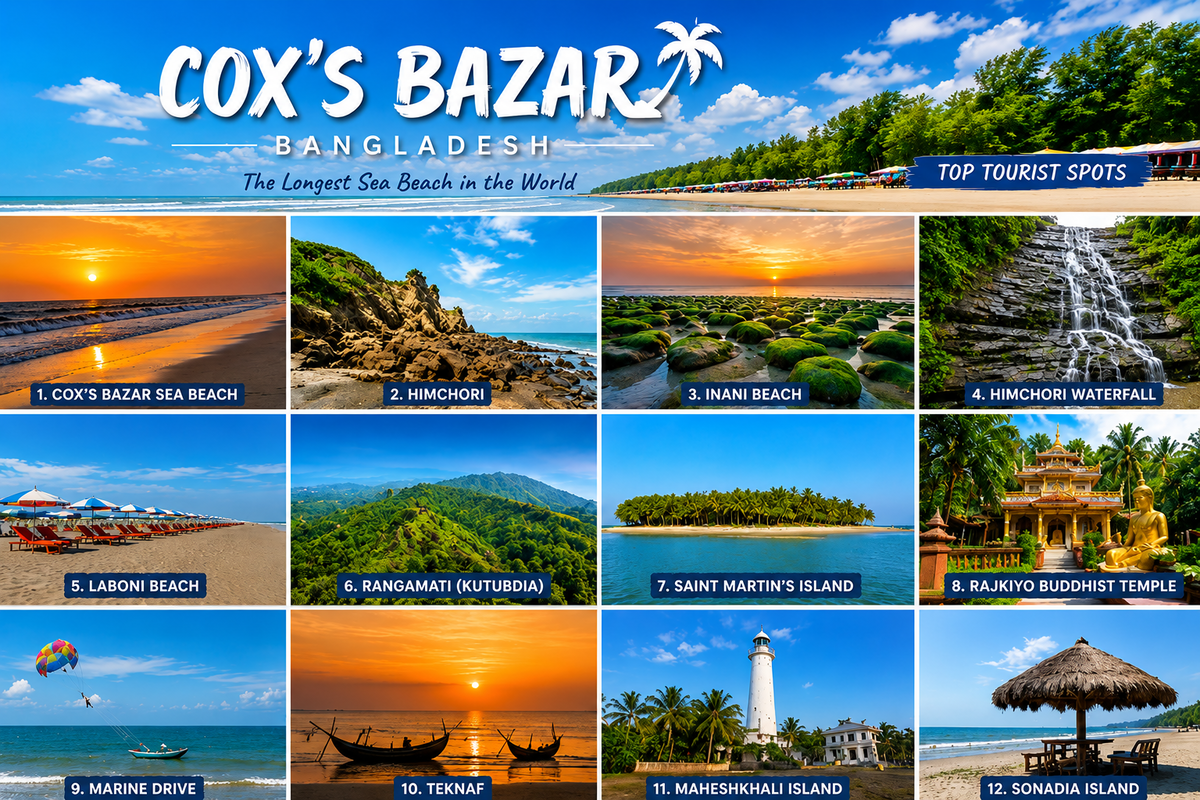
Inani Beach, located roughly 18 kilometres south of Cox’s Bazar town along the Marine Drive Road, is a revelation. Unlike the sandy expanse of the main beach, Inani is studded with layers of reddish-brown coral rocks that emerge from the shallow water during low tide, creating a landscape that feels almost alien in its beauty.
Local fishermen have worked these waters for generations, and you can still see their colourful wooden boats drifting past at dawn. The water here is notably clearer than at the busier stretches of beach, making it ideal for wading, photography, and simply sitting among the rocks and listening to the waves. At sunrise and sunset, the coral formations catch the light in extraordinary ways, producing photographs that are impossible to replicate anywhere else in Bangladesh.
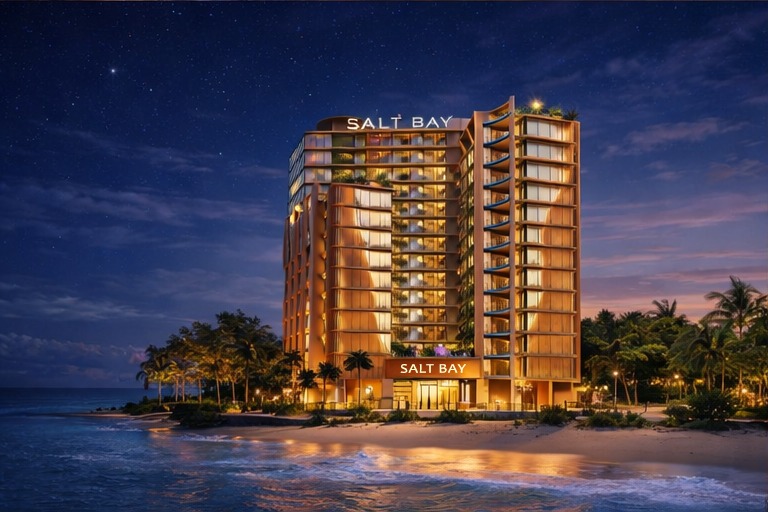
It is on this very stretch of coastline that Salt Bay is rising—a 15-storey, 367-room five-star hotel that will stand 206 feet tall directly on Marine Drive Road at Inani Beach. When it opens its doors in 2029, it will be the most luxurious beachfront property in the country, and early investors are already securing premium suites with guaranteed monthly halal income.
2. Himchari: Waterfalls Where the Jungle Meets the Sea
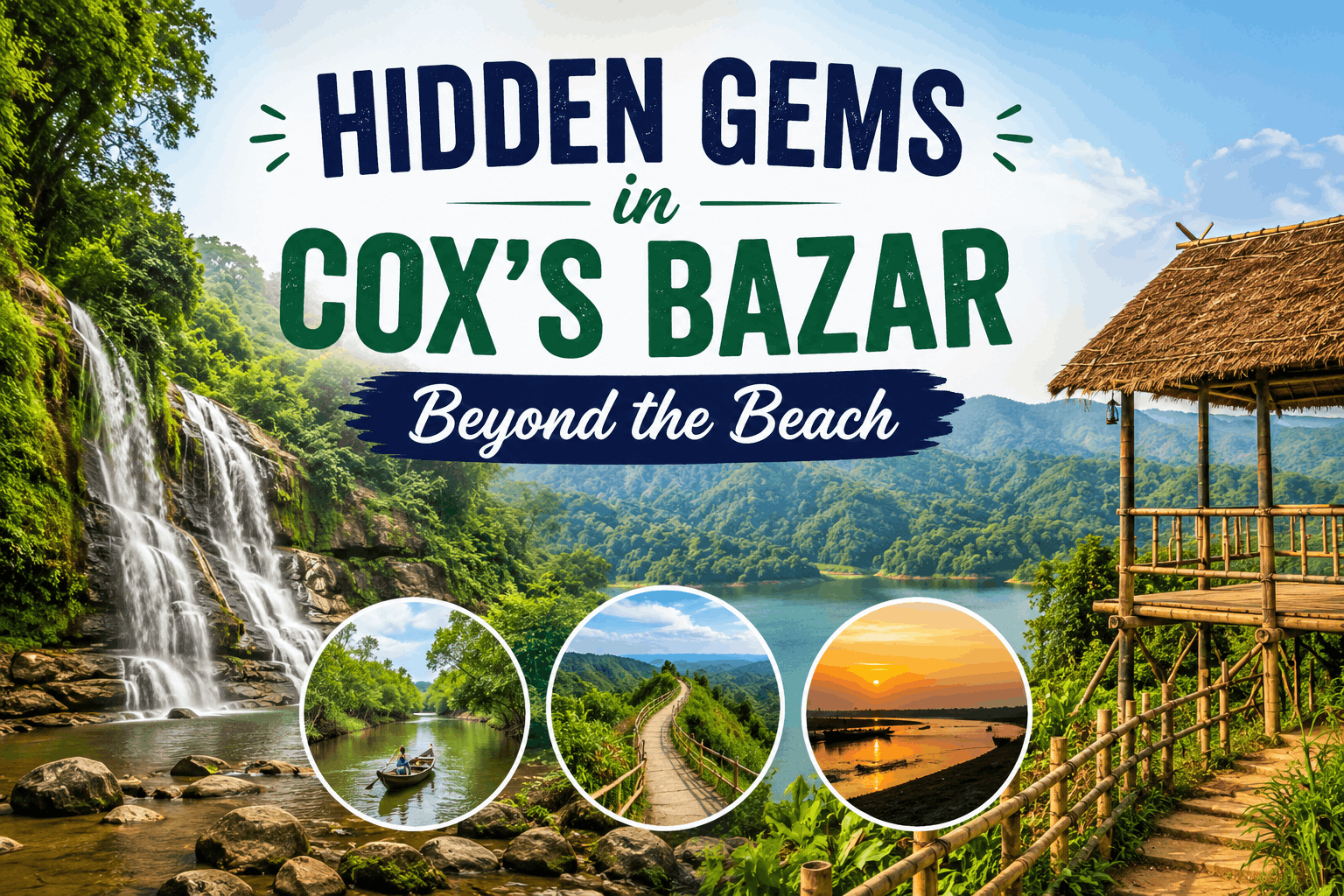
A few kilometres south of Cox’s Bazar, the landscape rises dramatically into green hills before tumbling back down to the ocean. Himchari National Park is a 1,729-hectare protected reserve that feels like a lost world. Trails wind through dense tropical forest, past orchids and ferns, leading hikers to a series of cascading waterfalls that plunge directly onto the beach below. The combination of jungle, waterfall, and open sea in a single frame is utterly unique to this stretch of coastline.
The main waterfall at Himchari is the most accessible, and during the monsoon season from June to September it swells into a spectacular torrent. But the real hidden gems are the smaller falls further along the trail, reachable only on foot through the forest. Here you are likely to encounter rare birds, langur monkeys in the canopy above, and butterflies in extraordinary variety. Pack sturdy shoes, carry water, and allow at least half a day for a proper exploration.
Wildlife enthusiasts should note that Himchari is also home to spotted deer, wild boar, and an impressive diversity of reptiles. The park authority runs guided nature walks that are highly recommended for first-time visitors and families with children.
3. Ramu: The Buddhist Heritage Village Hidden in Plain Sight
Twenty kilometres east of Cox’s Bazar town, the quiet village of Ramu is one of the most culturally significant yet undervisited destinations in the entire region. Ramu has been home to a substantial Buddhist community for centuries, and the evidence of this heritage is everywhere—in the golden domes of ancient pagodas, the carved wooden temples draped in prayer flags, the enormous reclining Buddha statues that preside serenely over manicured temple gardens.
There are more than 30 Buddhist temples and monasteries in and around Ramu, each with its own character. Some contain centuries-old bronze statues and sacred relics. Others are surrounded by ponds thick with lotus blossoms and patrolled by friendly monks in saffron robes who are happy to talk with respectful visitors. The Ramu Rajbanhar temple complex, which houses one of the largest reclining Buddha statues in Bangladesh, is particularly impressive at dawn when incense smoke drifts through the golden light.
Ramu is also famous for its handwoven textiles. Local artisans still produce traditional cotton fabrics using wooden looms, and the markets are stocked with sarongs, scarves, and bedspreads in vivid colours. A visit to a weaver’s workshop is a genuinely moving experience—and the products make excellent, ethically sourced souvenirs.
4. Teknaf: The Southernmost Point and the River to Myanmar
Follow Marine Drive Road all the way south past Inani and you eventually reach Teknaf, the southernmost tip of mainland Bangladesh. This is where the Naf River separates Bangladesh from Myanmar, and the view across the water to the green hills of Rakhine State is both beautiful and quietly thought-provoking. Teknaf Wildlife Sanctuary protects the last significant area of rainforest in the region and is one of the few remaining habitats in Bangladesh where Asian elephants still roam.
The township of Teknaf itself is a frontier settlement with a raw, frontier energy. The fish markets are extraordinary—chaotic, colourful, and stacked with species that most urban Bangladeshis have never seen. Fishermen sort their catch on the docks while seabirds wheel overhead, and the air is thick with the briny smell of the deep sea. It is not comfortable tourism in the conventional sense, but it is real, visceral, and deeply memorable.
From Teknaf, ferries make the short crossing to Saint Martin’s Island, Bangladesh’s only coral island and arguably the country’s most beautiful natural attraction. Day trips are possible, but an overnight stay on the island—sleeping to the sound of waves with a sky full of stars overhead—is an experience that ranks among the finest in all of South Asia.
5. Saint Martin’s Island: Bangladesh’s Only Coral Paradise
Saint Martin’s Island (known locally as Narikel Jinjira, or Coconut Island) is the jewel in Cox’s Bazar’s crown and yet still surprisingly off the radar for many international travellers. The island measures just about eight square kilometres, but within that compact space it packs white sandy beaches, shallow turquoise lagoons, dense coconut groves, and some of the finest coral reef snorkelling in the Bay of Bengal.
The island has been designated a marine protected area, and conservation efforts have begun to reverse some of the damage caused by overfishing and unregulated tourism in the 1990s and 2000s. Today, the reef is slowly recovering, and snorkellers who wade out from the eastern beach can see an increasing variety of reef fish, sea turtles, and coral formations. Fishing boats are visible on the horizon all day, and by evening the local restaurants fill with grilled barracuda, lobster, and crab fresh from the water.
Accommodation on the island ranges from basic guesthouses to more comfortable beach bungalows. The contrast with the luxury that awaits visitors at Salt Bay on Inani Beach is considerable—and many travellers choose to split their Cox’s Bazar trip between island roughing-it and five-star pampering, a combination that perfectly captures the range of experiences the region offers.
6. The Tribal Villages of the Hill Tracts Border
The hills that rise inland from Cox’s Bazar are home to several indigenous communities—the Marma, Chakma, Rakhine, and Tanchaynga peoples—who have maintained their distinct languages, traditions, and crafts through centuries of change. Visiting these communities, with appropriate respect and ideally through a responsible local guide, is one of the most culturally enriching experiences available anywhere in Bangladesh.The Rakhine people, many of whom have lived in Cox’s Bazar district for generations, are particularly skilled weavers. Their traditional dress features bold geometric patterns in deep reds, blacks, and golds, and the weaving itself is an intricate process passed down from mother to daughter. Some community-based tourism initiatives now offer visitors the chance to try weaving on a traditional loom, learn traditional cooking methods, and attend cultural performances.These encounters provide a powerful reminder that Cox’s Bazar is not merely a beach destination but a place of extraordinary human diversity—a borderland where Bengali, Buddhist, Muslim, and tribal cultures have coexisted, traded, and influenced each other for centuries.
7. Marine Drive Road: Asia’s Most Scenic Coastal Highway
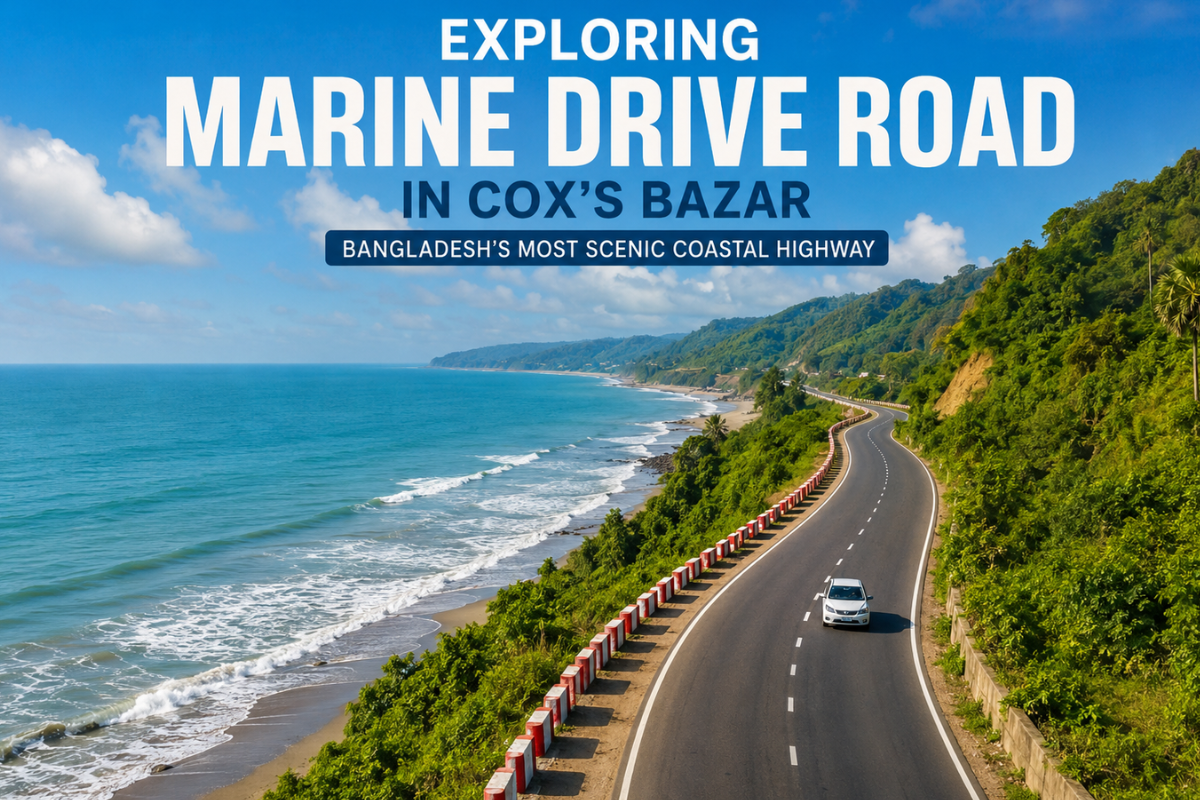
The 80-kilometre Marine Drive Road that runs from Cox’s Bazar town down to Teknaf is one of the most beautiful coastal drives in the whole of Asia, and yet it remains virtually unknown outside Bangladesh. The road hugs the shoreline with the Bay of Bengal glittering on one side and the forested hills of Teknaf Wildlife Sanctuary rising on the other, occasionally passing through small fishing villages, past roadside shrimp farms, and over wooden bridges that creak pleasantly underfoot.The best way to experience Marine Drive is slowly. Rent a motorcycle or hire a CNG auto-rickshaw for the day, stop whenever something catches your eye, and allow yourself to become completely absorbed in the landscape. There are hidden coves accessible by short walks through the forest, viewpoints on hilltops reached by steep stone steps, and small tea stalls where you can sit and watch the fishing boats returning with the evening tide.Salt Bay’s prime address on Marine Drive Road at Inani Beach places guests at the very heart of this extraordinary journey—with the option to experience the drive in a chauffeured limousine, one of the luxury services the hotel will offer from day one.
8. The Seafood Culture: Eating Like a Local in Cox’s Bazar
No visit to Cox’s Bazar is complete without a serious engagement with its food culture. The region produces some of the finest seafood in Bangladesh, and the local preparation methods—heavily spiced, often grilled over open coals, always cooked to order—bear little resemblance to what is served in urban restaurants. The hidden gems of Cox’s Bazar culinary scene are not the tourist-facing establishments on the hotel strip but the small stalls and open-air restaurants clustered around the fish markets.Chingri bhorta (mashed dried shrimp with mustard oil, green chilli, and onion), ilish curry (hilsa fish in mustard gravy), and freshly grilled lobster with lime and butter are among the dishes that define the local table. In the evenings, the beach grills come alive—fishermen become cooks, their boats still sandy from the morning catch, and the smell of fish and spices drifts across the sand.At Salt Bay, this culinary tradition will be elevated to a five-star level: five premium restaurants serving both international cuisine and elevated interpretations of Bengali coastal dishes, including a rooftop restaurant commanding 10,000 square feet of sea-view dining space. The salt air and the sound of waves will be exactly the same. The tablecloths will not.
9. Sunrise and Sunset: The Two Golden Hours Worth Waking For
Cox’s Bazar faces west, which means it is one of the few places in Bangladesh where you can watch the sun set directly into the sea—a golden disc sinking into the Bay of Bengal as fishing boats drift silently across the horizon. The sunsets at Inani Beach are particularly dramatic because the coral rocks catch the last light and hold it like fire, creating a landscape of extraordinary warmth and colour.But the sunrises are equally special, particularly for those willing to set an alarm. The eastern sky behind the hills turns from black to deep violet to pink to blazing orange while the beach remains quiet and the tide is low, exposing the wet sand in a perfect mirror. A morning walk on Inani Beach at first light, with the coral rocks still dark and the birds just beginning to call, is a meditation on the beauty of simple things.From the upper floors of Salt Bay, guests will have unobstructed panoramic views of both the sea and the hills, making every sunrise and sunset a private spectacle from the comfort of a luxury suite.
10. Why Inani Beach Is the Investment Address of the Decade
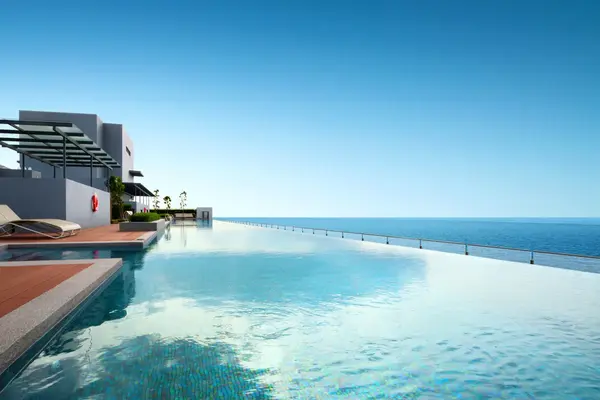
The hidden gems of Cox’s Bazar are no longer entirely hidden. Tourism to the region has been growing at a remarkable rate year on year, and the Bangladeshi government has identified Cox’s Bazar as a priority zone for tourism infrastructure development. New roads, new airport expansions, and new hospitality projects are reshaping the landscape at speed.Inani Beach, with its superior natural beauty and relative tranquillity compared to the main Cox’s Bazar strip, is emerging as the premium address for luxury tourism. Salt Bay (saltbaybd.com), developed by the Bhaiya Group—a conglomerate with concerns across 18 industries and more than 30 luxury hospitality projects—is at the forefront of this transformation. The project offers investors the opportunity to own premium suites in a five-star beachfront hotel and earn guaranteed monthly halal income from day one of operations. With 367 rooms and suites spanning executive, deluxe, luxury, premium, and presidential categories, Salt Bay is designed to serve both leisure and corporate travellers at the highest international standards. The hotel’s amenities include two luxury swimming pools, a fully equipped gymnasium, spa, sauna, yoga facilities, movie theatre, kids’ zone, conference and banquet halls, a shopping centre, and a dedicated prayer space. Expected handover is 2029. The window for early investment is open now. Visit saltbaybd.com to explore investment options, review the company profile, and connect with the Salt Bay team.
Conclusion: Cox’s Bazar Is Only Just Beginning
The hidden gems of Cox’s Bazar—Inani’s coral beach, Himchari’s jungle waterfalls, Ramu’s Buddhist heritage, Teknaf’s frontier energy, Saint Martin’s coral paradise, the indigenous villages of the hill borderlands, the cinematic Marine Drive, the extraordinary seafood culture, and the twin spectacles of sunrise and sunset over the Bay of Bengal—these are experiences that can change the way a person thinks about Bangladesh, about travel, and about what it means to truly discover a place. Cox’s Bazar is no longer the secret it once was, but it is still far from overexposed. The infrastructure is catching up with the ambition, and the next decade will see it emerge as one of South Asia’s great tourism destinations. Those who discover it now—as travellers and as investors—are arriving at exactly the right moment. Salt Bay at Inani Beach will be the finest place in Bangladesh to experience it all. Luxury accommodation with guaranteed returns, world-class dining with a sea view, and a location at the centre of everything Cox’s Bazar has to offer. The future is being built on Marine Drive Road. Visit saltbaybd.com and be part of it.